
Remittances & Transfer Networks
What Is a Financial Remittance?
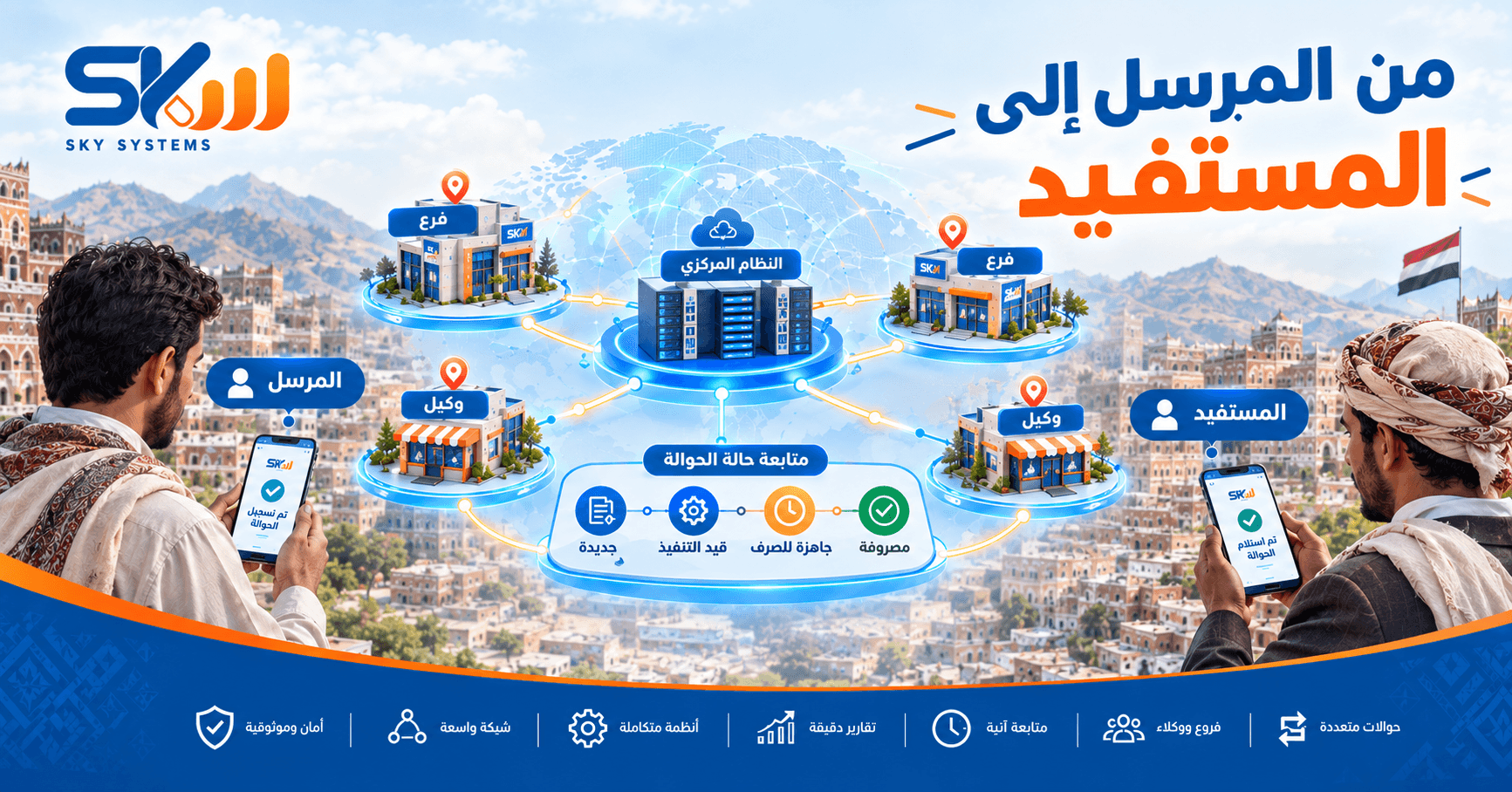
A financial remittance is a process through which money is sent from one party to another through a transfer service or network that records the transaction, processes it, and tracks its status until it reaches the beneficiary.
A remittance may take place within the same network or between branches, agents, or entities connected to a transfer network.
What Happens When a New Remittance Is Created?
The process begins by entering the sender’s and beneficiary’s information, the amount, currency, and the entity that will receive the remittance.
The transaction is then recorded in the system and assigned a reference number that helps track it and access its details when needed.
How Are Remittance Details Verified?
Before the transaction is processed, the financial entity needs to verify the required information according to its approved procedures.
This helps ensure that the information is accurate and reduces errors that could affect the processing or payout of the remittance.
How Can a Remittance Be Tracked?
A remittance can be tracked using its data, reference number, and status within the system.
It may be new, in progress, ready for payout, paid, or in another status depending on the procedures followed by the transfer network.
What Happens If the Beneficiary Does Not Collect the Remittance?
Failure to collect the remittance does not mean that the transaction disappears from the system.
The remittance remains recorded, and its status and details can be accessed so that the required action can be followed according to the policy of the entity that processed the transaction.
What Happens When There Is an Error in the Remittance Data?
How the error is handled depends on the type of data and the procedures followed by the financial entity.
The important point is that the transaction remains recorded, allowing the company to review it and understand what happened rather than relying on memory or scattered documents.
What Role Do Branches Play in Transfer Networks?
Branches are key points for sending and receiving remittances.
As the number of branches increases, management needs a standardized way to record and track transactions and understand what is happening at each branch.
How Does a Company Manage a Network of Branches or Agents?
This can be done through a centralized system or interconnected systems that allow transactions to be recorded, remittances to be tracked, and financial and operational activity to be monitored by branch, agent, and user permissions.
This gives management a clearer view of the network’s overall performance instead of having to monitor each branch separately.
What Happens When the Number of Remittances Increases?
As transaction volume grows, so does the need to organize data, search quickly, manage transaction statuses, and generate reports.
What can be managed manually with a limited number of transactions can become extremely difficult when operations reach hundreds or thousands of remittances.
Can Remittances Be Managed Manually?
Some procedures can be handled manually, but heavy reliance on manual work becomes more prone to errors, delays, and repeated data entry as the network expands and transaction volumes increase.
This is why specialized systems become increasingly important as the business grows.
Why Is the Remittance Reference Number Important?
The reference number helps distinguish one remittance from another and provides quick access to its details.
It can be used for tracking, inquiries, checking the transaction status, and reviewing its history when needed.
How Do Systems Help Reduce Remittance Errors?
Systems help organize data, enforce defined steps during transaction registration, reduce repeated data entry, and provide access to the transaction history.
However, a system alone cannot prevent every error. The outcome also depends on the accuracy of the data, the procedures in place, and how the system is used.
How Does Management Know How Many Remittances Have Been Processed?
Through reports that consolidate the transactions recorded in the system. These can be categorized by period, branch, status, currency, or other available data.
This means management does not need to review every individual transaction to understand the overall picture.
Why Are Reports Important for Transfer Networks?
Reports help management understand transaction volumes, remittance statuses, branch performance, and overall network activity.
They also help identify changes and issues, monitor performance, and make decisions based on actual data.
Can Transfer Network Branches Be Connected to One System?
Yes. Systems can be designed so that branches operate within an interconnected environment, allowing transactions to be recorded and data to be shared according to defined permissions and procedures.
This reduces information fragmentation and helps management monitor the network more clearly.
What Happens When Network Branches Operate Separately?
Data may become distributed across multiple locations, making it difficult to see the complete picture of operations.
This can also lead to repeated data entry, difficulties in preparing reports, and challenges in tracking remittance statuses between branches.
Can a Transfer Network Be Connected to Other Systems?
Yes. Transfer systems can be connected to other systems and services when needed, such as accounting systems, communication channels, or digital services.
The approach depends on the nature of the systems and the type of integration required.
Does a Remittance End Once It Is Paid?
Payout is an important stage, but it is not the end of the transaction’s value to the system.
The remittance data and transaction history remain available for reference and can be included in reports and records according to the financial entity’s policies.
How Can Technology Help Develop Transfer Networks?
Technology helps organize operations, connect branches, speed up access to data, improve tracking and reporting, and reduce repetitive work.
As the network evolves, systems can become an essential part of how operations are managed—not simply a tool for recording remittances.
What Does a Transfer Network Need as It Grows?
As the network grows, it needs systems capable of handling increasing numbers of transactions, branches, users, and data while maintaining organization, permissions, reporting, and tracking.
Most importantly, system management needs to evolve alongside the network so that technology itself does not become an obstacle to expansion.
Conclusion
A remittance may appear to the customer as a simple transaction, but behind it is a complete journey involving data entry, verification, tracking, payout, and reporting.
As a transfer network expands and the number of branches and transactions increases, the need for an organized and interconnected system becomes even more important.
The success of a transfer network does not depend only on processing the remittance. It also depends on the ability to manage and track it and understand what is happening across the entire network.
Audience
This section is relevant to:
Exchange and financial transfer companies
Remittance networks
Branches and agents
Financial operations managers
Financial and administrative departments
Exchange company owners
Professionals interested in financial technology and financial systems
Discover Sky Forex Pro for Remittance Network and Exchange Company Management →